The Toridoll Group aims to realize a recycling-oriented society that does not deplete limited resources, and is also working to actively use renewable resources.To that end, we have set target figures for reducing food waste, food recycling rates, and water usage as environmental management goals, and are focusing our activities on these areas.
Waste reduction results
The Toridoll Group is working to reduce waste by setting annual targets using backcasting from fiscal 2013 as the base year, starting from fiscal 2028, the target year.

2015 Fiscal Year | 2016 Fiscal Year | 2017 Fiscal Year | 2018 Fiscal Year | 2019 year | 2020 year | 2021 Fiscal Year | 2022 year | 2023 year | 2024 year | |
|---|---|---|---|---|---|---|---|---|---|---|
food Waste (t) | 22,028 | 23,524 | 24,836 | 28,388 | 20,938 | 19,852 | 19,026 | 17,134 | 19,320 | 24,402 |
food waste Basic unit (kg/ million yen) | 246.6 | 250.6 | 244.9 | 270.8 | 250.0 | 258.5 | 231.8 | 189.9 | 185.8 | 149.9 |
Recycling, etc. Implementation rate (%) | 23.4 | 20.5 | 17.5 | 13.3 | 14.2 | 14.7 | 14.9 | 16.1 | 16.5 | 36.5 |
*2013-2023: Total stores of Toridoll Holdings, Marugame Seimen, Toridoll Japan, KONA'S, and Meat no Yamagyu
From FY2024 onwards: Total stores of Toridoll Holdings, Marugame Seimen, Toridoll Japan, KONA'S, Nikuno Yamagyu, AS and ZUND
Reducing food waste
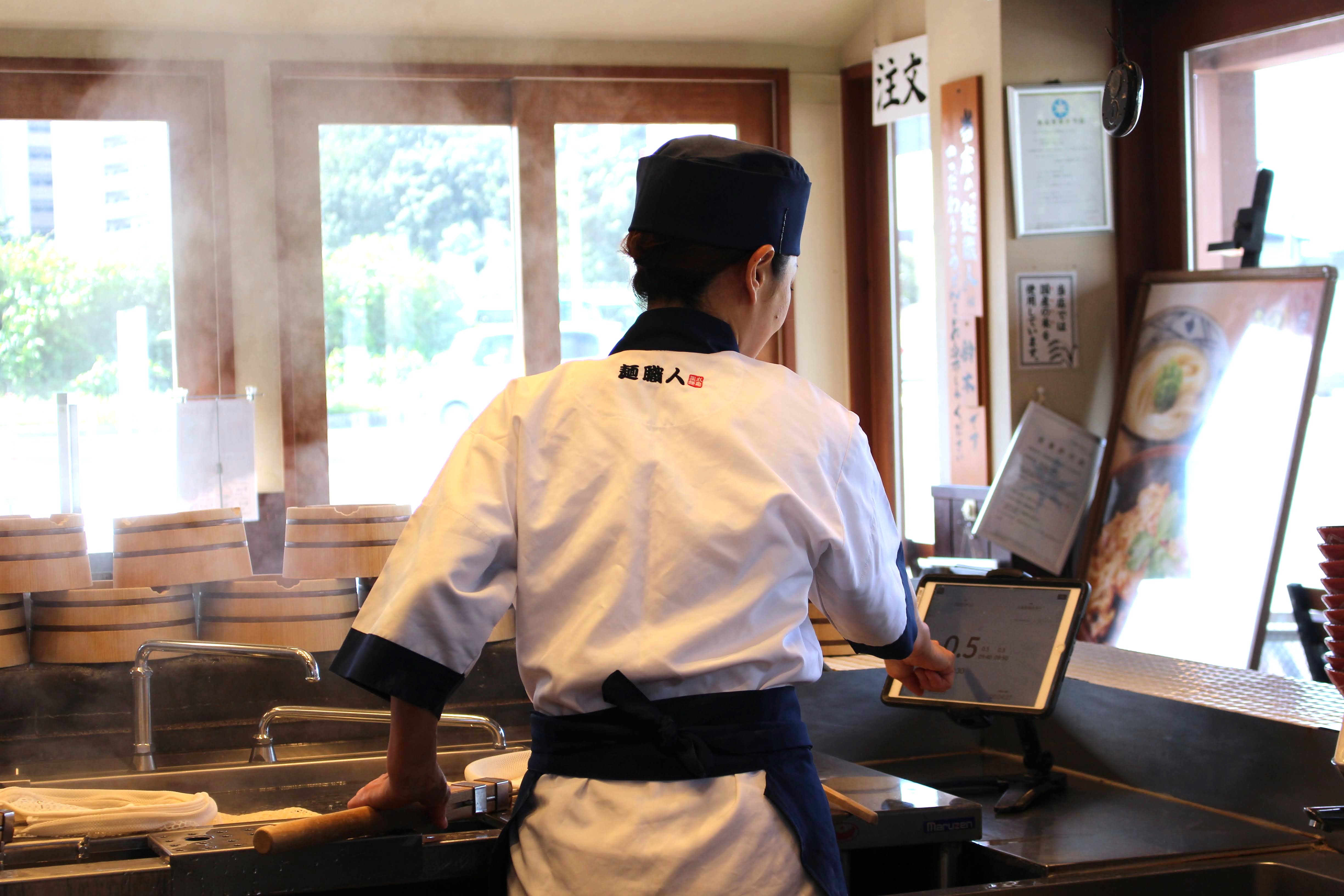
Initiative to reduce boiled noodle waste through digital management based on store visitor predictions
The Toridoll Group is making efforts to reduce waste and food loss in its daily operations.
For example, at Marugame Seimen, in order to provide handmade, freshly made products, cooking and preparation are carried out at each store according to customer visit status, which also leads to reducing food waste. Furthermore, this activity is being promoted, and customer visit status at each store is being accumulated and analyzed as digital data. By more accurately timing the boiling of udon noodles through digital prediction, we are working to avoid over-preparing noodles. This initiative to reduce boiled noodle waste has been introduced at all Marugame Seimen stores.
Recycling food waste in collaboration with other companies
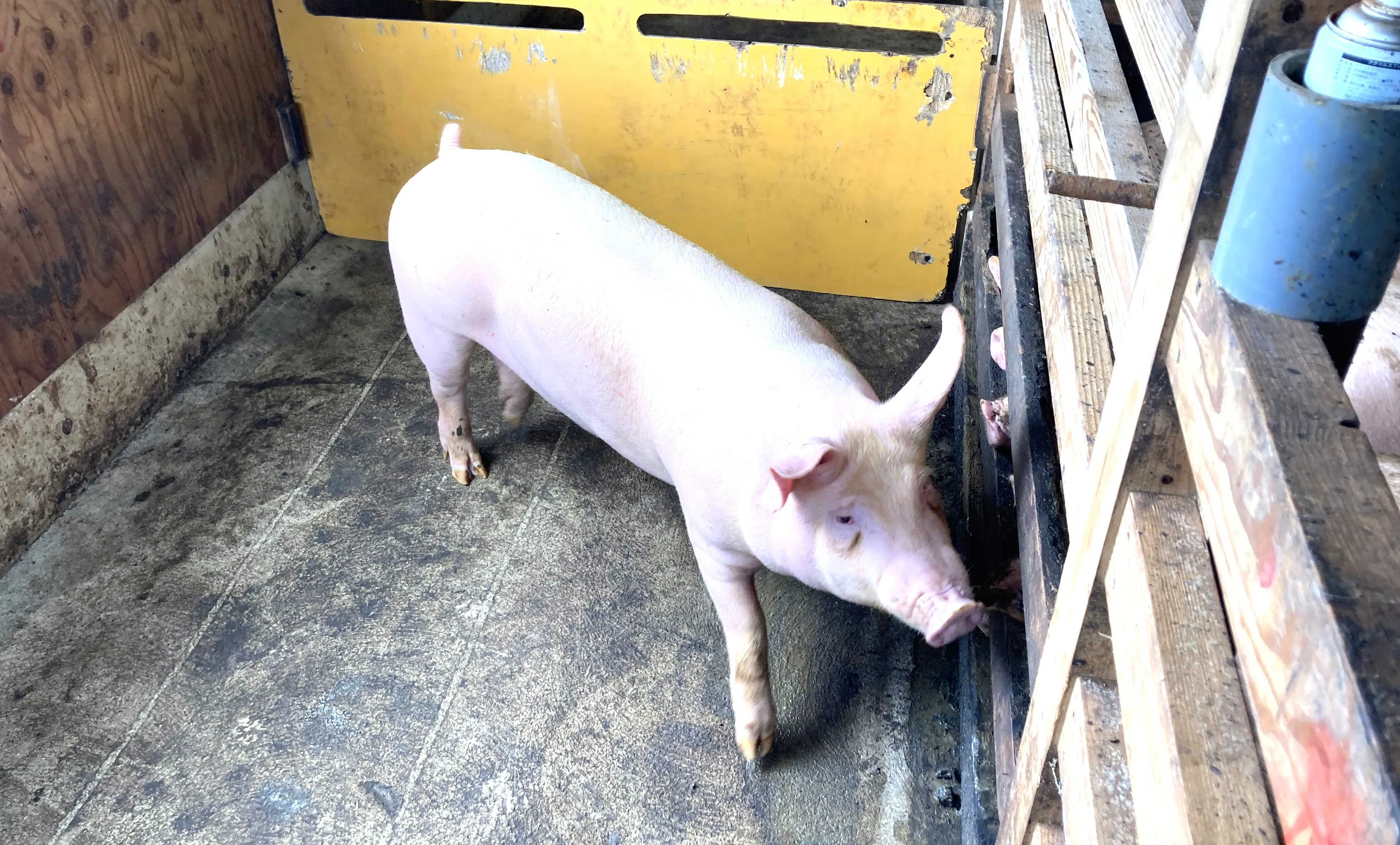
The Toridoll Group, in collaboration with five restaurant operators, mainly in Aichi Prefecture, is collecting food waste from its restaurants and turning it into animal feed (eco-feed). By procuring eggs from chickens raised on this eco-feed, the group is realizing a circular food recycling loop.
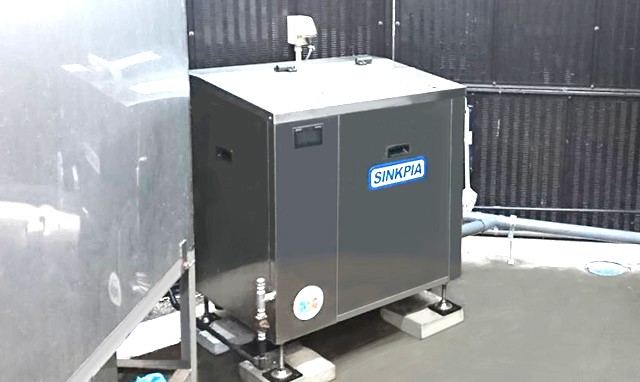
Furthermore, starting in February 2022, we will collaborate with Matsuya Foods Holdings Co., Ltd. to collect discarded noodles, rice balls, and other items from displays at 23 stores in Tokyo, Saitama, and Gunma, and turn them into pig feed. We will continue to increase the number of participating stores and strive to make effective use of food that would otherwise be discarded.
Building a food recycling loop in collaboration with other restaurant companies.
Toridoll Holdings, in collaboration with four other restaurant companies (Seven & i Food Systems Co., Ltd., Matsuya Foods Co., Ltd., Ringer Hut Japan Co., Ltd., and Watami Co., Ltd.), has established and is continuously implementing a food recycling loop.
This recycling loop received certification for its "Recycling Business Plan" under the Food Recycling Law from the Minister of Agriculture, Forestry and Fisheries, the Minister of the Environment, and the Minister of Health, Labour and Welfare in July 2020, making it the first such certification for a food service business at the time.
Through this initiative, five restaurant companies operating restaurants in Nagoya City, Aichi Prefecture, utilize food waste and other recyclable resources, which are then processed into animal feed by a recycling company (Chubu Organic Recycle Co., Ltd.). This feed is then used to feed chickens at a poultry farm (Sun Egg Farm Co., Ltd.). The restaurants then purchase the eggs produced, which are then offered to customers as products, creating a complete food recycling loop.
Introducing raw food waste disposers
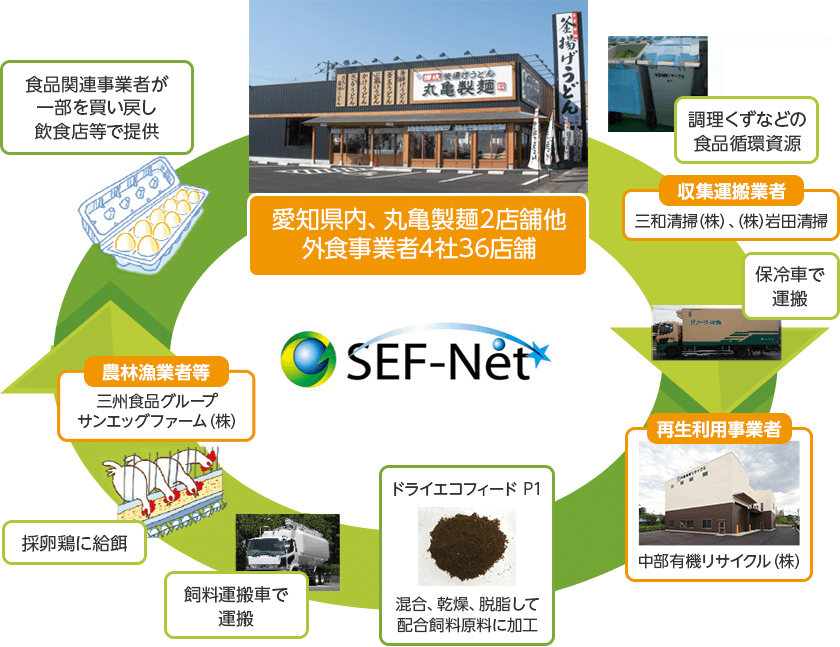
As part of its efforts to reduce its environmental impact and realize a recycling-oriented society, Marugame Seimen has installed biodegradation processing machines in some of its stores that can process approximately 30 kg of food waste per day.
Reducing food waste within stores also reduces CO₂ emissions associated with transporting and incinerating waste. It also reduces the risk of bad odors and pest infestations caused by food waste, contributing to improved store hygiene. We are considering expanding the adoption of this system as one way to reduce food waste generated in stores.
Introduced a skimming machine that cuts the waste weight in half.
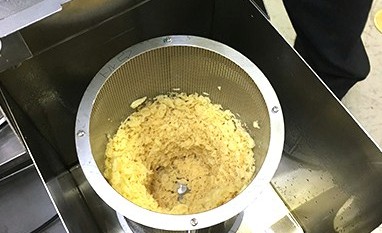
The Toridoll Group has installed tempura scraping machines in approximately 500 stores, which can efficiently collect oil from tempura scraps.
By de-oiling the fried food scraps before disposing of them, it is possible to reuse the oil, which also reduces the amount of waste. This initiative allows us to recover and reuse the oil, which accounts for approximately 45% of the fried food scraps, and is not only an effective way to recycle resources, but is also expected to be highly economical, as it reduces disposal costs.
Reducing waste oil generation by recycling waste oil and installing oil filters
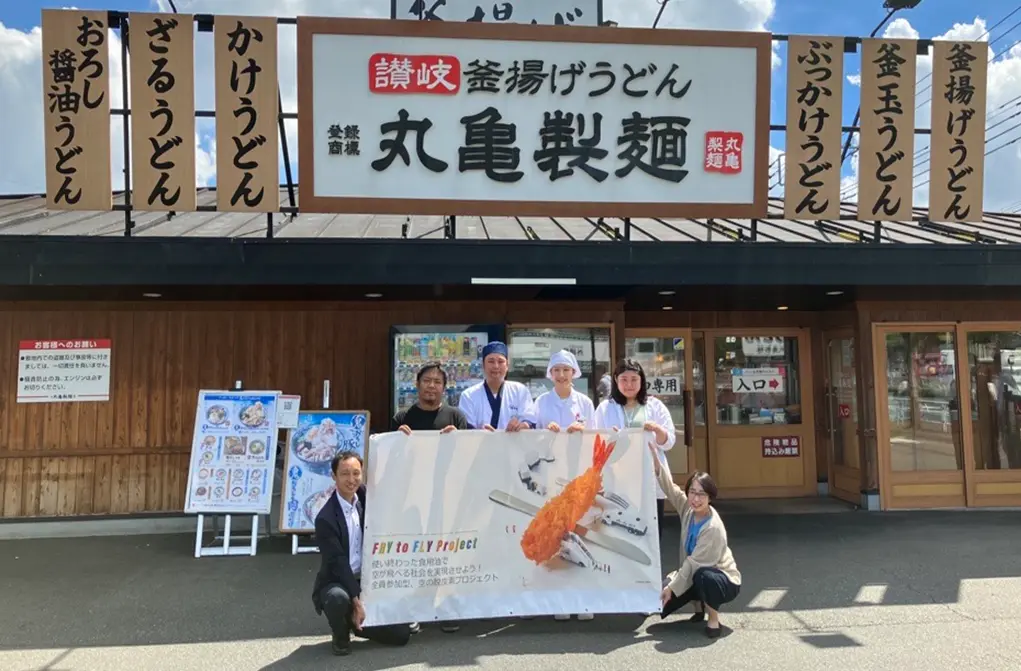
The Toridoll Group recycles over 99% of the waste oil generated by its stores in Japan, and much of this is recycled into sustainable aviation fuel (SAF).
Furthermore, in order to minimize the waste of resources associated with cooking, Marugame Seimen has installed oil filters specifically for fryers in all of its stores. By regularly filtering the oil and maintaining its quality, the company has been able to significantly extend the frequency of oil changes, which has resulted in a reduction in the amount of waste cooking oil generated. This initiative not only contributes to reducing the environmental impact through the effective use of resources and the reduction of waste, but also leads to the realization of sustainable store operations.
Other waste reduction
Repairing and reusing udon tubs
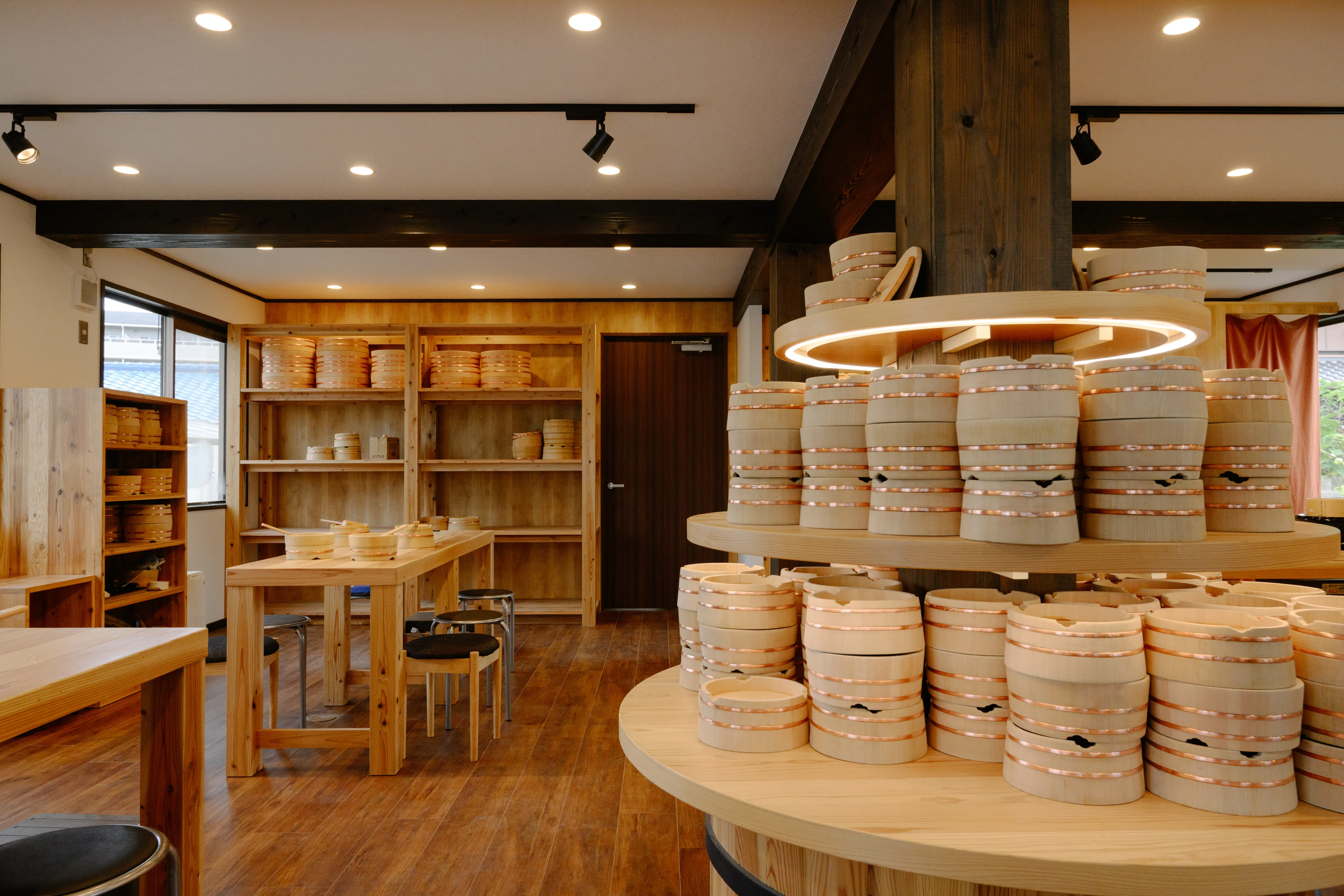
The Toridoll Group has established Toridoll D&I Co., Ltd. as a special subsidiary to promote employment of people with disabilities, and the company repairs udon tubs used by Marugame Seimen.
At Marugame Seimen Oke Kobo, we manually repair and reuse kamaage udon tubs that have deteriorated or been damaged over time in our stores.
Upcycling used chopsticks
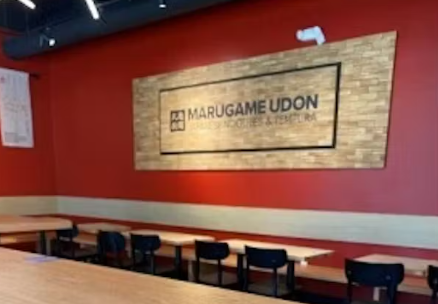
Starting in March 2025, Marugame Seimen began collaborating with ChopValue Manufacturing Japan Co., Ltd., a manufacturer of sustainable furniture and interior goods, to collect disposable chopsticks for upcycling at five stores in Kawasaki City.
MARUGAME UDON's first Canadian store, located in Dunsmuir, Vancouver, has been collecting disposable chopsticks in-store in collaboration with ChopValue since fiscal year 2024, earlier than in Japan, and some of the upcycled wood is being displayed as in-store signs. A total of 287,077 pairs of chopsticks were collected between March 2024 and March 2025, and the store will continue to do so.
Going paperless in offices and with shareholder coupons
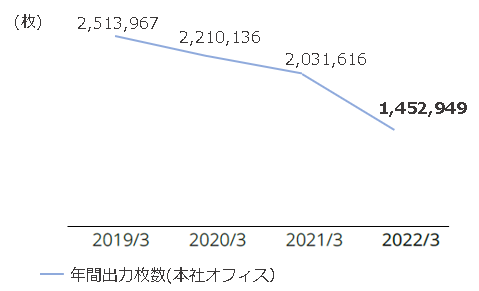
Toridoll Holdings launched the "Paperless Project" in 2018 to promote paperless operations with the objectives of (1) environmental consideration, (2) operational efficiency, and (3) reduction of information leakage risk. The project aimed to reduce paper usage by creating an environment where work could be done without printing documents on paper and by encouraging a change in mindset among employees. From fiscal year 2018 (base year), when the project was launched, to fiscal year 2022, the annual number of printed pages was reduced to less than half, and although the measurement has ended, the paperless workplace environment continues.
Furthermore, in fiscal year 2023, we digitized shareholder benefit coupons to promote a paperless system and improved convenience by making them usable in 10-yen increments instead of 100-yen increments. This digitization of shareholder benefit coupons resulted in a reduction of approximately 11.7 tons of paper usage annually.
Reducing Water Consumption
Reducing Water Consumption via Restaurant Equipment
The Toridoll Group uses a large amount of water resources in the cooking process and other areas, and is working to use water resources sustainably through the development of cooking equipment and employee education.
For example, by installing various water-saving devices according to the purpose of each faucet in the kitchen, we are improving the functionality of the equipment and reducing water usage. Also, in some stores in shopping centers, wastewater from the chiller (cooling water circulation device) that produces cooling water to cool udon noodles is reused in the pre-washing process in the dish washing area. Through the accumulation of small efforts, we have achieved our environmental management target for water usage, and we will continue our activities in the future.
Contamination prevention
The Toridoll Group in Japan complies with the Sewerage Act, the Water Pollution Prevention Act, and local ordinances, and has installed grease traps that separate water and oil depending on the condition of each store, taking appropriate measures to prevent oil and other substances from leaking into the sewer. Although there were no serious cases of environmental pollution in fiscal 2024, we will continue to comply with laws and regulations and work with local communities to promote environmental protection.
Employee training aimed at reducing water consumption
The Toridoll Group regards the conservation of water resources as an important theme, and is developing and gradually replacing equipment with water-saving features. We also believe that the proper use of these devices requires the understanding and daily awareness of our employees, and therefore we provide ongoing training on how to use water in store operations and how to properly handle equipment. Going forward, we will continue to strive to optimize water usage from both an equipment and operational perspective, and work toward sustainable store operations.
[This page was last updated on January 30, 2026] The figures are for fiscal year 2024, but some of the initiatives include information for fiscal year 2025.




.png)



.png)